
Published: February 27, 2026 | By a Senior Tech Content Strategist
Ten generations. That’s how far Google has come since the original Pixel launched in 2016, and the Google Pixel 10 Pro — unveiled at the annual Made by Google ’25 Keynote in Brooklyn, New York on August 20, 2025 — is the most meaningful milestone in that journey. Not because it’s the most powerful phone on paper. Not because it has the flashiest spec sheet. But because, more than any flagship before it, the Pixel 10 Pro is a smartphone built from the ground up to be your most intelligent, personal, and proactive AI companion — one that understands you, anticipates your needs, and makes every interaction smarter.
If you’ve been curious about the Pixel 10 Pro, this is the only guide you need. From the Tensor G5 breakthrough to the triple camera system and everything in between, here is the complete story of Google’s tenth-generation compact flagship.
The Made by Google ’25 Moment
For the second consecutive year, Google chose August — not October — to launch its flagship phones, deliberately placing the Pixel 10 series in the spotlight before Apple’s traditional September iPhone event. The strategy signals growing confidence: Google is no longer content to play second fiddle in the premium smartphone conversation.
Announced on August 20, 2025, alongside the Pixel 10, Pixel 10 Pro XL, and Pixel 10 Pro Fold, the Pixel 10 Pro had pre-orders open the same day and was released in the United States on August 28. Alongside the phones, the Pixel Watch 4 and Pixel Buds 2a rounded out the lineup as companion accessories.
The Pixel 10 Pro is positioned as the compact flagship of the series — delivering every premium Pro-grade feature in the same form factor as the standard Pixel 10. It’s the phone for users who don’t want to compromise on capability but refuse to carry something the size of a small tablet.
Design: A Decade of Refinement
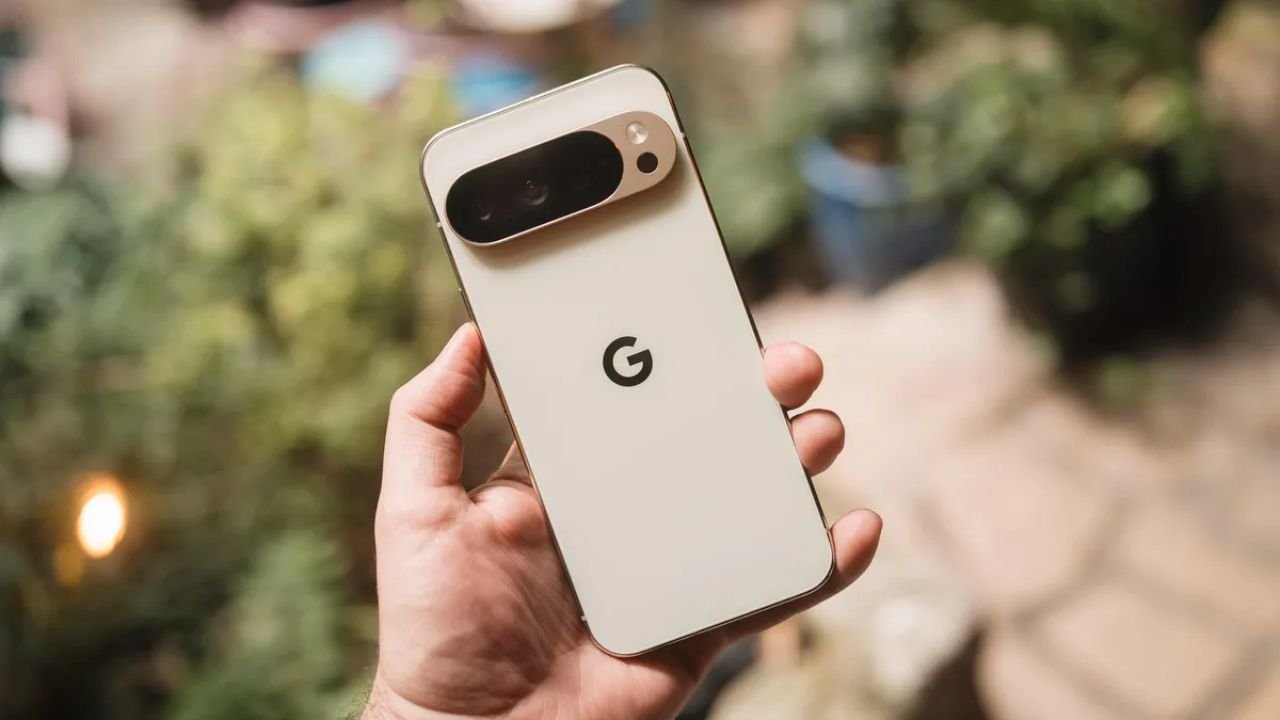
The Pixel 10 Pro design is a slightly modified version of the Pixel 9 Pro. Like its predecessors, it features flat sides, rounded corners, and the oval-shaped camera bar. Google hasn’t chased radical reinvention — instead, it has refined what was already one of the most distinctive and recognisable designs in the smartphone industry.
The Pixel 10 Pro shares dimensions with the base Pixel 10, featuring a 6.3-inch even-bezeled display, while the Pixel 10 Pro XL has a larger 6.8-inch display. For users who have been frustrated by the relentless growth of flagship phone sizes, the 6.3-inch Pro is a rare breed — a compact phone that sacrifices nothing except physical bulk.
At 8.5mm thin and 207 grams, the Pixel 10 Pro is a well-balanced device that feels exceptional in hand. Reviewers from Digital Camera World describe it as “one of the most beautifully designed smartphones you can buy” that “feels superb in the hand.”
It comes in four colors: Obsidian, Porcelain, Jade, and Moonstone. The Jade colorway, in particular, has drawn admiration from reviewers for its understated elegance.
Build quality is premium throughout. All models in the Pixel 10 series feature Corning Gorilla Glass Victus 2 and an IP68 rating for dust and water resistance. IP68 means the Pixel 10 Pro can survive submersion in up to 1.5 metres of fresh water for up to 30 minutes — a meaningful real-world durability credential.
The Pixel 10 Pro is eSIM-only, meaning there is no physical SIM card slot. Users store multiple eSIMs, use two numbers at once, and gain enhanced security since no one can remove a SIM if the phone is lost.
The aluminium housing uses 100% recycled content, and the product is made with at least 30% recycled materials based on product weight, with 100% plastic-free packaging.
Pixelsnap: Google Answers the MagSafe Question
One of the most significant hardware additions to the Pixel 10 Pro is one that Google users have been requesting for years: magnetic wireless charging. Pixelsnap is a Google-branded feature that adds a circular magnet array to the back of the phone to align cases, wallets, phone mounts, stands, wireless charging pucks, and other accessories using the magnetic field. It is based on Qi2, the wireless charging standard that introduced the MagSafe magnetic array found in iPhones since the iPhone 12.
The Pixel 10 Pro supports the Qi2 Standard, allowing wireless charging speeds up to 15W with Qi2 chargers. The Pixel 10 Pro XL exclusively supports Qi2.2, which can charge up to 25W with compatible chargers. They are among the first Android smartphones primarily available in western markets to contain magnets built directly into the back of the phone.
For iPhone converts and Android users who have envied MagSafe’s convenience, Pixelsnap is the answer they have been waiting for. It also opens up a growing ecosystem of Google-branded and third-party magnetic accessories.
Display: Brightest Ever on a Pixel
The Pixel 10 Pro features a 6.3-inch Super Actua LTPO OLED display — and it is the brightest display Google has ever put on a Pixel phone.
The display delivers a peak brightness of 3,300 nits and HDR brightness of up to 2,200 nits. In direct sunlight, outdoor readability is exceptional — one of the consistent strengths across all Pixel 10 reviews. The Smooth Display delivers an adaptive refresh rate ranging from 1Hz to 120Hz, conserving battery during static content while delivering butter-smooth animations and scrolling during active use.
A meaningful quality-of-life upgrade is the increase in PWM dimming rate. The PWM dimming rate increases from 240Hz to 480Hz compared to the Pixel 9 Pro, significantly reducing eye strain and headaches for users with eye fatigue by minimizing flicker. This is a detail that most spec sheets overlook but that makes a real, daily difference — particularly for extended reading and night-time use.
The display supports HDR10+ content and delivers the vibrant, accurate colour reproduction that Google’s Super Actua panels are celebrated for.
Tensor G5: Google’s Most Ambitious Chip Yet
The heart of the Pixel 10 Pro — and the enabler of everything that makes it special — is the Google Tensor G5. This is not merely an incremental chipset upgrade. It represents a fundamental transformation in how Google designs its custom silicon.
The TSMC Breakthrough
The Tensor G5 was designed fully from scratch — unlike earlier Tensor models (G1 through G4), which were adapted from Samsung’s Exynos chips and manufactured by Samsung Foundry. Google has moved entirely to TSMC, the same manufacturer behind chips for Apple and Qualcomm, using their state-of-the-art N3E 3nm processing node.
Compared to Samsung’s Exynos fabrication, TSMC provides better efficiency, meaningful performance improvements, and lower operating temperatures. Tensor overheating had plagued older Pixel models and was revealed to be the number one reason older handsets were returned. With the G5, that problem is directly addressed at the silicon level.
Performance Numbers That Matter
The CPU is up to 34% faster on average, with significant gains in single and multi-threaded performance. Google says to expect improvements in responsiveness when browsing the web, launching apps, OS rendering, AI experiences, and other workloads. The chip configuration includes one big performance core, five mid-performance cores, and two efficiency cores. Hardware and software thermal controls have been upgraded to let the chip operate at higher frequencies without throttling.
The TPU (Tensor Processing Unit) is up to 60% more powerful for on-device AI tasks. This is the number that matters most for the Pixel 10 Pro’s core identity as an AI phone.
Tensor G5 features LPDDR5X RAM with higher memory bandwidth and UFS 4.0 flash storage for faster read/write performance across all tasks.
Real-World Performance: Honest Assessment
Benchmarking shows Tensor G5 is considerably less powerful than the Qualcomm Snapdragon Elite processors powering other Android flagships, or Apple’s in-house silicon. But day-to-day, the difference is rarely noticeable. Navigating, multitasking, editing photos — all of it feels smooth and fast.
The chip shows its limitations primarily in video recording, with a limited combination of settings available at higher frame rates, including dropping HDR support, speech enhancement, and active stabilisation at 4K60. For gaming enthusiasts pushing demanding titles at maximum settings, there are also occasional frame rate limitations.
But for its intended purpose — powering Google’s most advanced on-device AI capabilities — the Tensor G5 is precisely the right tool.
Gemini & Galaxy AI: The Agentic Intelligence Layer
The Pixel 10 Pro runs the newest Gemini Nano model from DeepMind on-device. This is not cloud-dependent AI — it is intelligence that lives on the phone, processes your data locally, and protects your privacy.
Gemini Nano runs 2.6x faster and 2x more efficiently on Tensor G5 compared to Tensor G4, with a 32K token context window — enough to process roughly a month’s worth of emails or a hundred screenshots simultaneously, compared to the 12K window on the previous generation. This expanded context is what makes the Pixel 10 Pro feel genuinely smarter across AI interactions.
Magic Cue: Proactive Intelligence
Magic Cue is an agentic suggestion integration that leverages on-device machine learning to provide relevant information to the user during a text conversation or phone call. It scans information in emails, messages, notes and surfaces relevant suggestions to autofill in a text message or display during a phone call. It is integrated with Google services, including Gmail, Keep Notes, Google Messages, and Google Calendar.
In practice, imagine receiving a call from your airline and Magic Cue automatically surfacing your flight booking details, gate information, and a real-time flight status update — without you searching for anything. This is what proactive, agentic AI looks like in daily life.
Call Notes with Actions
Building on the Pixel’s long history of call assistance features, Call Notes with Actions uses Tensor G5 to transcribe calls in real time and surface suggested follow-up actions — calendar entries, reminders, saved contacts — based on the conversation content.
Scam Detection & Loss of Pulse Detection
Google’s March 2026 Pixel Drop added two notable safety features. Scam Detection uses on-device AI to analyse calls and conversations in real time, alerting users to potential scams. Loss of Pulse Detection — a medically significant capability — uses the Pixel’s sensors to detect if a user may have experienced sudden cardiac events, automatically contacting emergency services if no response is received.
Google AI Pro One Year Free
With the purchase and activation of a Pixel 10 Pro, users receive a full year of Google AI Pro — valued at $239.88 based on the monthly auto-renewal rate of $19.99 per month — which includes Gemini Advanced, Gemini for Gmail and Docs, and expanded Google One storage. For professionals who rely on Google Workspace, this free trial alone represents significant value.
Camera System: Consistent Excellence at Every Distance
Photography has always been the Pixel’s calling card, and the Pixel 10 Pro delivers the brand’s most complete and capable triple camera system yet.
Triple Rear Camera Setup
Primary Wide Camera: 50MP. The main sensor delivers Google’s signature combination of outstanding dynamic range, natural colour science, and computational photography magic. Real Tone — Google’s commitment to accurate skin tone representation across all complexions — has been further improved, with more nuanced and natural results across diverse subjects.
Ultra-Wide: 48MP with Macro Focus. The ultra-wide camera’s resolution upgrade to 48MP is a meaningful step up, with sharper edge detail and more usable images from the 120° field of view. Macro Focus allows close-up photography at distances as tight as 2cm — unlocking creative perspectives that traditional cameras cannot access.
Telephoto: 48MP, 5x Optical Zoom. This is where the Pixel 10 Pro takes a significant step forward. The 5x periscope telephoto delivers outstanding long-range photography with laser-quick autofocus and Optical Image Stabilisation. Optical quality zoom levels include 0.5x, 1x, 2x, 5x, and 10x, with Super Res Zoom extending to higher magnifications.
Pro Res Zoom: 100x AI-Powered Zoom
Pro Res Zoom uses a combination of cropping and generative AI, powered by the Tensor G5 chip, to refine details at up to 100x zoom. The Pixel Camera model powering this feature has nearly 1 billion parameters — Google’s largest Pixel Camera model to date. It is also the first diffusion model running in the Pixel Camera app, with the TPU playing a central role. For comparison, zoom on the Pixel 8 Pro’s G3 was powered by tens of thousands of parameters, while the Pixel 9 Pro’s G4 was in the low millions.
The result is zoom photography that genuinely punches above its hardware weight class — though Google itself recommends it primarily for landmarks and landscapes, with special tuning applied when people are detected in the frame.
High-Res & High-Res Portrait Mode (50MP)
For photographers who want maximum resolution, the Pixel 10 Pro supports High-Res shooting up to 50MP full resolution, capturing every available detail from the main sensor — ideal for large prints, detailed landscapes, or images that will require significant cropping.
Camera Coach: AI-Guided Photography
Camera Coach is a Gemini-powered virtual guide that assists the user in taking photos by providing step-by-step instructions for proper framing, lighting, composition, and more. There’s also a “Get Inspired” option that suggests completely new shots and guides the user through how to create them.
This feature is designed for users who want to improve their photography skills rather than simply applying automatic processing — a thoughtful addition that makes the Pixel 10 Pro genuinely educational for casual photographers.
AI Photo & Video Editing Tools
The full suite of Google’s celebrated AI editing tools is present and enhanced on the Pixel 10 Pro:
Magic Eraser — removes unwanted objects and people from photos, intelligently filling the background.
Best Take — analyzes multiple versions of a group photo and composites the best expression from each person into a single perfect shot.
Add Me — uses AI to add the photographer themselves into group photos taken on a tripod or flat surface.
Photo Unblur — sharpens motion-blurred photos in post.
Motion Deblur (Video) — the upgraded custom ISP performs more granular scene segmentation to understand regions and objects, enabling motion deblur in video for smoother, sharper footage.
10-Bit Video by Default — the Pixel 10 records 10-bit video by default at 1080p and 4K30, delivering a wider colour gamut and more editing headroom for post-production.
Front Camera
The 10.5MP front camera with autofocus delivers Google’s signature natural portrait results — accurate skin tones, excellent HDR handling, and consistently flattering (without being artificially beautified) selfie performance.
Android 16 & Material 3 Expressive: A Fresh Interface
The Pixel 10 Pro is the first phone to feature Material 3 Expressive, Google’s latest UI that brings more personalisation and fluidity to the Android experience with springy animations and smooth interactions.
Material 3 Expressive is not just a cosmetic update. It represents a fundamental rethinking of how information is presented, how navigation flows, and how the OS responds to user input. Transitions feel more alive, interactions more responsive, and the overall experience more cohesive than any previous version of Android.
Android 16 also introduces a Desktop Mode — a long-requested feature that allows the Pixel 10 Pro to function as a basic desktop computer when connected to an external display, keyboard, and mouse. For professionals who travel light and want to eliminate a laptop for simple tasks, this is a meaningful addition.
Battery & Charging: Adequate But Not Exceptional
The Pixel 10 Pro carries a 4,870mAh battery — a slight reduction from the Pixel 9 Pro, which has drawn mild criticism from reviewers. 91mobiles notes it carries the smallest battery in the Pixel 10 lineup, and battery life has been flagged as a relative weakness alongside its heavier-than-expected weight for a compact device.
In real-world use, the combination of Tensor G5’s improved efficiency and Android 16’s battery management means most users will comfortably make it through a full working day. Google claims up to 30+ hours of battery life, though this figure applies to lighter usage patterns.
Charging speeds are one area where Google still lags noticeably behind Chinese Android manufacturers:
- 30W wired charging (included cable, no charger in box)
- 15W Qi2 wireless charging via Pixelsnap
- Reverse wireless charging for accessories like the Pixel Watch
The 30W wired charging is functional but conservative — competitors at this price point offer 65W to 100W+ charging. For a phone targeting professionals, the slower charging speed is a genuine daily friction point.
Connectivity: Ready for Everything
- 5G (Sub-6GHz and mmWave in select markets)
- Wi-Fi 7 (802.11be) for the fastest available wireless connectivity
- Bluetooth 5.3
- NFC for Google Pay and contactless payments
- USB 3.2 Gen 2 Type-C for fast data transfer and display output
- Satellite connectivity — in areas without cellular or Wi-Fi, users can connect to emergency services via satellite to get help and share their location.
- In-display fingerprint sensor (optical)
- Face Unlock for quick, convenient authentication
Security: Fort Knox in Your Pocket
The Titan M2 coprocessor works alongside Tensor G5 to provide Google’s most advanced hardware security. The Titan M2 handles secure key storage, verified boot, and protects sensitive user data even if the operating system is compromised.
Combined with seven years of monthly security updates and Google’s Pixel-exclusive security features — including Advanced Protection Mode for high-risk users, VPN by Google One, and on-device AI processing that keeps sensitive data off the cloud — the Pixel 10 Pro makes a compelling case as the most security-conscious mainstream Android phone available.
Pricing: Global & India
Global Pricing
The Pixel 10 Pro starts at $999.99 for the base 16GB + 128GB configuration.
| 16GB + 128GB | $999.99 |
| 16GB + 256GB | $1,099.99 |
| 16GB + 512GB | $1,199.99 |
| 16GB + 1TB | $1,299.99 |
Pixel 10 Pro owners receive a full year of Google AI Pro included with purchase.
India Pricing
The Google Pixel 10 Pro is priced at ₹1,09,999 in India, making it one of the most competitively positioned flagship phones in the premium Android segment for the Indian market.
| 16GB + 256GB | ₹1,04,850 (Amazon) |
| 16GB + 512GB | ₹1,19,999 |
The Pixel 10 Pro is available in India via Amazon India, Flipkart, the Google Store, and authorised retail partners. It is currently receiving discounts in early 2026, with Amazon India offering up to ₹15,000–₹20,000 off the retail price periodically — making it an even more compelling value proposition.
Seven Years of Updates: The Long Game
The Pixel 10 Pro comes with seven years of OS upgrades, security updates, and Pixel Drops — Google’s regular feature releases that add new capabilities between major Android versions. This commitment extends the usable life of the device through at least 2032, making it one of the best long-term value propositions in the Android world.
In contrast, most Android manufacturers offer three to four years of OS updates, and Samsung’s recently extended commitment of seven years is a newer policy. For the Pixel line, seven-year support has been the standard since the Pixel 8 — a lasting competitive advantage.
Pixel 10 Pro vs. The Competition
vs. Samsung Galaxy S26 Ultra ($1,299 / ₹1,39,999)
The Galaxy S26 Ultra wins on raw performance (Snapdragon 8 Elite Gen 5 vs Tensor G5), camera zoom range (5x periscope + better 200MP main sensor), the S Pen, Privacy Display, and storage options. The Pixel 10 Pro counters with a more compact size, more natural photography output, stronger pure Google AI integration, significantly lower price, and a cleaner software experience. For pure power users who want the best spec sheet, the Galaxy S26 Ultra wins. For users who want the smartest, most natural AI experience in a comfortable form factor, the Pixel 10 Pro is the better choice.
vs. Apple iPhone 17 Pro ($1,099)
This is the most closely contested comparison. The iPhone 17 Pro leads in raw CPU/GPU benchmarks, video recording quality, and the seamlessness of the Apple ecosystem. The Pixel 10 Pro counters with more versatile AI features (especially on-device Google AI), Pixelsnap’s Qi2 charging standard, a more open platform, and — for Android users — a superior native experience. For anyone already in the Google ecosystem, the Pixel 10 Pro is the more natural choice.
vs. OnePlus 13s / Vivo X200 Pro (₹65,000–₹90,000 in India)
Chinese flagship competitors offer more raw processing power, faster charging (80W+), and larger batteries at significantly lower prices. The Pixel 10 Pro responds with superior software experience, guaranteed seven-year updates, Google’s AI ecosystem, and the brand trust of a Pixel in markets where that matters. For value-conscious Indian buyers, the OnePlus 13s is a serious alternative — but the Pixel 10 Pro’s AI features, update commitment, and Google ecosystem integration remain differentiators.
What Critics Are Saying
The Pixel 10 Pro has been received warmly by the press, with consistent praise for its design, display, camera reliability, and AI features — balanced by honest acknowledgement of Tensor G5’s benchmarking limitations.
Digital Camera World concludes: the Pixel 10 Pro “nails the everyday photography experience in a way few competitors can match,” calling it “the best choice for most people who simply want to point, shoot, and get consistently excellent results without thinking about it.”
91mobiles describes it as “the only compact Pixel with Pro-grade hardware and seven years of updates, making it a solid choice” — while noting it “carries the smallest battery in the lineup and charges slowly.”
PhoneArena offers a balanced take: “Pixels were never about raw power in the first place” — a philosophy that explains much of what the Pixel 10 Pro is and why its audience remains deeply loyal.
Quick Specs Reference
| Announced | August 20, 2025 |
| Released | August 28, 2025 |
| Display | 6.3″ Super Actua LTPO OLED |
| Resolution | 1280 x 2856 pixels |
| Refresh Rate | 1–120Hz adaptive |
| Peak Brightness | 3,300 nits |
| Chipset | Google Tensor G5 (TSMC 3nm) |
| RAM | 16GB LPDDR5X |
| Storage | 128GB / 256GB / 512GB / 1TB (UFS 4.0) |
| Main Camera | 50MP wide |
| Ultra-Wide | 48MP with Macro Focus |
| Telephoto | 48MP, 5x optical zoom |
| Max Zoom | 100x (Pro Res Zoom) |
| Front Camera | 10.5MP with autofocus |
| Battery | 4,870mAh |
| Wired Charging | 30W |
| Wireless Charging | 15W Qi2 (Pixelsnap) |
| OS | Android 16, One UI — Material 3 Expressive |
| Security | Titan M2 coprocessor |
| Connectivity | 5G, Wi-Fi 7, Bluetooth 5.3, NFC, USB 3.2 |
| Water Resistance | IP68 |
| Satellite | Emergency SOS via satellite |
| Updates | 7 years OS + security |
| Colours | Obsidian, Porcelain, Jade, Moonstone |
| Price (US) | From $999.99 |
| Price (India) | From ₹1,04,850 |
Who Should Buy the Google Pixel 10 Pro?
Buy it if you are: deeply embedded in the Google ecosystem, someone who values consistent, reliable photography over spec-sheet maximalism, a professional who wants the most capable on-device Google AI experience, a compact phone lover who refuses to compromise on flagship features, or an upgrade-averse buyer who wants a phone they can trust for the next seven years.
Consider alternatives if: gaming performance is a priority (the Snapdragon 8 Elite in Samsung and OnePlus flagships is faster for games), fast charging is non-negotiable (30W will frustrate heavy users), or you want the absolute best video recording quality at high frame rates.
The Smartest Compact Flagship of 2025
The Google Pixel 10 Pro represents a decade of learning, refinement, and clear-eyed focus on what Pixel is for. It is not the fastest phone. It is not the phone with the longest zoom. It is not the phone with the biggest battery. But it is the phone that makes you feel most supported, most understood, and most capable — because the intelligence built into it is more deeply integrated into your daily life than any competing device.
The Tensor G5’s leap from Samsung Exynos fabrication to TSMC’s 3nm process is the foundational step that enables everything else — faster on-device AI, better efficiency, lower temperatures, and more capable processing for the features that make Pixel special. Pixelsnap finally brings magnetic Qi2 charging to Google’s ecosystem. The 480Hz PWM display makes long-term use more comfortable than any previous Pixel. And Camera Coach, Pro Res Zoom, and Magic Cue represent the next chapter in Google’s campaign to make AI genuinely useful — not just present.
At $999.99 globally and from ₹1,04,850 in India — with one year of Google AI Pro included — the Pixel 10 Pro is among the most compelling value propositions in the premium Android market in 2026. It is the Android phone for people who think.